Hutton-le-Hole and the moors villages
Stone cottages, a stream running through the green, and sheep wandering the roads — the quiet moors villages beyond Whitby and Goathland.
Quick facts
Top tours and experiences
We earn a small commission if you book through GetYourGuide or Viator — at no extra cost to you. Every tour is hand-picked and verified.


Hutton-le-Hole is the archetype of the North York Moors stone village — a beck running openly through a wide village green, unfenced sheep grazing the verges, and no attraction beyond the setting itself, which is exactly the point for visitors who’ve had enough of ticketed sights.
| Where | North York Moors, via Kirkbymoorside |
| --- | --- |
| Cost | Free village; Ryedale Folk Museum from around £11 for adults |
| --- | --- |
| Time needed | Half a day for Hutton-le-Hole, more with a moors drive |
| --- | --- |
| Getting there | Car essentially required; public transport is minimal |
| --- | --- |
| Best time | April-October; August for heather on the moorland |
What Hutton-le-Hole actually offers
There isn’t a single headline attraction here beyond the village itself: honey-coloured stone cottages arranged around a green split by the Hutton Beck, with sheep from the surrounding moor wandering freely across the grass (this is common grazing land, not decorative livestock, and it’s genuinely part of daily village life rather than staged for visitors). It photographs well and rewards simply sitting on the green for twenty minutes rather than rushing through. The one proper attraction is the Ryedale Folk Museum, an open-air site with reconstructed and relocated historic buildings — cruck-framed cottages, a blacksmith’s forge, a photographer’s studio — illustrating rural Yorkshire life from prehistory through the 20th century.
Entry runs around £11 for adults, and it’s a genuinely well-curated stop if you have an hour or two, particularly for families.
The wider moors villages worth knowing about
Hutton-le-Hole works best as an anchor for exploring a handful of similarly small, similarly quiet villages scattered across this part of the North York Moors. Lastingham, a few minutes’ drive away, has a Norman crypt beneath its parish church that predates the church above it — a genuinely atmospheric, little-visited piece of history most tourists never hear about. Rosedale Abbey, further north, sits in a dramatic bowl-shaped valley and takes its name from a long-vanished Cistercian priory, with almost nothing of the original abbey left but a striking setting and good walking routes onto the surrounding moor.
Lockton and Levisham, closer to the Pickering side, offer similar stone-cottage charm and connect to walking routes down into Newtondale, the glacial valley the North Yorkshire Moors Railway runs through.
Driving the moors roads
This corner of the North York Moors rewards simply driving the back roads between villages rather than following a fixed itinerary — routes like the road from Hutton-le-Hole over Blakey Ridge toward Rosedale Abbey climb onto genuinely open, high moorland with wide views and virtually no traffic outside peak summer weekends. In August, the heather across these ridges turns a deep purple that’s worth timing a visit around if you can. The roads are narrow in places, occasionally single-track with passing places, so this isn’t a route to rush — but that slower pace is largely the appeal.
Getting there from York
By car, Hutton-le-Hole is roughly an hour from York, typically via Kirkbymoorside on the A170. Public transport is minimal to non-existent for this cluster of villages — there’s no realistic way to see Hutton-le-Hole, Lastingham and Rosedale Abbey in a single day without a car, and even reaching Hutton-le-Hole alone by bus involves limited, infrequent services. This is genuinely a self-drive (or organised tour) destination rather than one suited to public transport.
Why bother, compared to Whitby or Goathland
Hutton-le-Hole and the surrounding villages don’t have a single famous attraction pulling in coach parties, and that’s precisely the value on offer — if Whitby or Goathland feel oversubscribed on a summer weekend, this cluster of villages gives a genuinely quieter, more contemplative version of North York Moors scenery. It suits visitors who’ve already done the headline Moors stops and want something slower on a return visit, or those explicitly prioritising crowd avoidance over ticked-off sights.
It pairs naturally with Helmsley, a reasonable 20-minute drive away, for a fuller day combining a market town, an abbey, and this quieter village cluster.
Walking from Hutton-le-Hole
Several waymarked walks start directly from the village, ranging from an easy hour-long loop along the beck and onto the moor edge to longer routes connecting toward Lastingham or up onto Spaunton Moor. None require technical hiking ability, but proper footwear matters — moorland paths get boggy after rain even in summer. The North York Moors walks guide covers route options in more detail for those wanting to build a walking day around this area.
Photography and quiet exploration
Because so few visitors venture into this cluster of villages compared to the headline Moors stops, it rewards a slower, more exploratory approach than a checklist visit — parking the car in Hutton-le-Hole and simply walking the lanes, stopping at the beck, and driving on to whichever neighbouring village looks appealing tends to work better than a fixed plan. Early morning and early evening light across the open moorland ridges, particularly around Blakey Ridge, is genuinely dramatic and largely free of the crowds that gather at more famous Yorkshire viewpoints at the same hours.
Practical notes
Facilities are minimal: a couple of tea rooms and a pub in Hutton-le-Hole itself, less in the smaller surrounding villages, so this isn’t the place for an extensive lunch stop compared to Helmsley or Pickering. Mobile signal is patchy across much of this stretch of moorland, worth knowing if relying on a phone for navigation — a paper map or downloaded offline route is a sensible backup. Sheep on the roads mean driving here calls for a slower pace than main roads elsewhere in Yorkshire.
Farming life and what you’re actually seeing
Much of what makes this cluster of villages distinctive isn’t a curated visitor experience but ordinary working agriculture continuing much as it has for generations — sheep farming on the open moor, small mixed farms in the valley bottoms, and a landscape shaped as much by grazing and drystone walling as by any deliberate scenic design. Understanding that context changes how the drive through Rosedale Abbey or the village green at Hutton-le-Hole reads: this isn’t a preserved museum piece but a genuinely functioning rural landscape that visitors are passing through rather than a destination built for them.
That distinction is part of why this area appeals particularly to visitors who’ve found the more heavily marketed Moors stops feel overly geared toward tourism.
Combining a full moors-villages day
For visitors with a car and a full day, a sensible loop starts at Hutton-le-Hole, continues to Lastingham for the crypt, then over toward Rosedale Abbey via the Blakey Ridge road, before looping back via Cropton or on to Pickering for a more substantial lunch stop and, if time allows, a short ride on the North Yorkshire Moors Railway. This kind of unhurried, multi-village loop is really what this part of the Moors rewards, rather than treating any single village as a standalone destination worth a dedicated special trip on its own.
Rosedale’s mining history
Rosedale Abbey’s peaceful bowl-shaped valley hides an industrial past that surprises most first-time visitors: in the 19th century, this was a significant ironstone mining area, with kilns, railway lines and a working population in the thousands supporting the industry at its Victorian peak. Almost nothing of that industry remains visible today beyond a few kiln ruins on the surrounding moor edges and the trackbed of the old mineral railway, now a popular walking route.
It’s a genuinely striking contrast — a valley that once rang with industrial activity now among the quietest, most rural-feeling corners of the North York Moors — and worth a mention to anyone assuming this landscape has always been purely agricultural.
When not to visit
Winter conditions on the high moorland roads around Hutton-le-Hole and Rosedale Abbey can be genuinely difficult — snow and ice affect the Blakey Ridge road in particular, one of the highest routes in the National Park, and closures aren’t uncommon after heavy winter weather. Anyone planning a winter visit should check road conditions specifically rather than assuming normal Yorkshire driving conditions will apply, and have a lower-altitude backup route in mind.
Hutton-le-Hole vs Goathland: two very different Moors villages
Both are commonly grouped together as “North York Moors villages,” but the comparison is useful precisely because they’re so different in character.
| Hutton-le-Hole | Goathland | |
|---|---|---|
| Draw | Quiet stone village, sheep on the green, folk museum | Steam railway, Heartbeat and Harry Potter filming locations |
| --- | --- | --- |
| Crowds | Low, even in peak season | Moderate-high, especially with film/TV fans |
| --- | --- | --- |
| Facilities | Minimal — a couple of tea rooms and a pub | Similarly minimal, but more visitors passing through |
| --- | --- | --- |
| From York | ~1 hour by car | ~1 hour to Pickering, then NYMR train |
If you’ve already done Goathland and found it busier than expected, Hutton-le-Hole is the natural next stop for a quieter version of the same broad landscape.
What to combine Hutton-le-Hole with
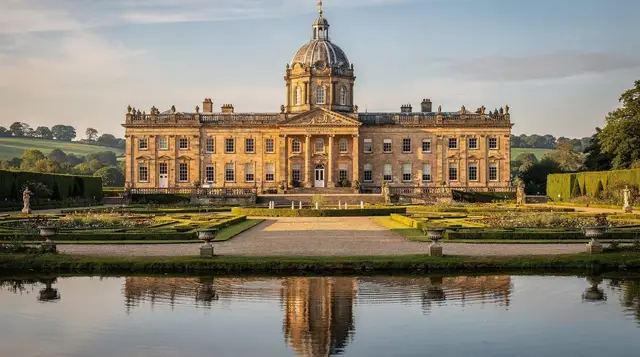
Given the amount of driving involved in reaching this corner of the Moors, it’s worth planning a fuller loop rather than a single-village visit. Helmsley, about 20 minutes away, adds a market town, a castle ruin and Rievaulx Abbey to the day. Castle Howard is a longer but plausible extension if you’re making a full day of driving around the Howardian Hills and North York Moors boundary. Both pair better with Hutton-le-Hole than trying to combine it with Whitby, which sits far enough away to require its own dedicated day.
A final word on pace
More than most stops covered in this guide, Hutton-le-Hole and its neighbouring villages punish a rushed visit and reward an unhurried one. There’s genuinely little to “do” in the conventional sightseeing sense beyond the Ryedale Folk Museum and Lastingham’s crypt — the value here is almost entirely in the driving, the walking, and the general absence of crowds, none of which suit being ticked off a list in a hurry. Visitors expecting a headline attraction on the scale of Whitby Abbey or Malham Cove will likely leave disappointed; those coming for a quieter, slower day will generally leave satisfied.
Frequently asked questions about Hutton-le-Hole and the moors villages
Is Hutton-le-Hole worth visiting if I’ve already seen Whitby and Goathland?
Yes, particularly if crowds were an issue at those stops — this is a genuinely quieter, slower alternative showing a different side of North York Moors life.
Can I visit Hutton-le-Hole without a car?
Realistically no; public transport is very limited across this cluster of villages, making a car or organised tour essentially necessary.
What is the Ryedale Folk Museum?
An open-air museum of reconstructed and relocated historic buildings in Hutton-le-Hole, illustrating rural Yorkshire life from prehistory to the 20th century, with entry around £11 for adults.
Are the sheep in Hutton-le-Hole village actually free-roaming?
Yes — the green is common grazing land, and sheep genuinely wander the village and verges as part of everyday moorland farming practice, not a staged attraction.
What’s the best time of year to drive the moors roads near Hutton-le-Hole?
August, for heather in bloom across the high moorland, though the roads are pleasant April through October; winter driving here can be affected by snow and exposed conditions.
Is Hutton-le-Hole better than Goathland?
They suit different priorities: Hutton-le-Hole is quieter and more contemplative, with no single headline attraction, while Goathland has the steam railway and screen connections that draw bigger crowds. Choose Hutton-le-Hole if crowd avoidance matters most.
Can I combine Hutton-le-Hole with Helmsley in one day?
Yes, comfortably — they’re about 20 minutes apart by car, and combining a market town and castle at Helmsley with this quieter village cluster makes a well-rounded full day.