Harrogate
Yorkshire's Victorian spa town: Bettys tea rooms, the Turkish Baths, RHS Harlow Carr and a genteel high street, 35 minutes from York.
Quick facts
Top tours and experiences
We earn a small commission if you book through GetYourGuide or Viator — at no extra cost to you. Every tour is hand-picked and verified.


Harrogate built its reputation in the 18th and 19th centuries on sulphur springs and the idea that visitors would pay to drink foul-tasting water for their health, and the town it grew into — wide boulevards, formal gardens, a genuinely grand Victorian bathhouse — has aged into one of Yorkshire’s most consistently pleasant places to spend a day. It’s not a place with a single blockbuster attraction; it’s a place where the tea rooms, the parks and the shopping streets add up to more than the sum of their parts.
| Where | 35 minutes by direct train from York |
| --- | --- |
| Cost | Free to walk the town and Stray; Harlow Carr and the Turkish Baths are ticketed |
| --- | --- |
| Time needed | A full day |
| --- | --- |
| Getting there | Direct train (no changes) or ~35-40 minutes by car |
| --- | --- |
| Best time | Spring for Harlow Carr; July for the Great Yorkshire Show |
Getting there
Harrogate has a direct rail line from York, no changes required, taking around 35 minutes — one of the easiest day trips on this list. Trains run roughly every 30 minutes on weekdays via Knaresborough, which sits on the same line and makes an easy add-on if you want to see both in one day (allow the full day if you’re doing both properly rather than rushing either). By car it’s a similar journey time via the A59, though parking in the town centre gets tight and pricey on Saturdays — the park and ride services on the edge of town are the more relaxed option if you’re driving.
Bettys and the tea room tradition
Bettys Café Tea Rooms on Parliament Street is the original branch (the York branch on St Helen’s Square is better known to tourists, but Harrogate’s is where it started in 1919, founded by Swiss confectioner Frederick Belmont). It does exactly what you’d expect — full afternoon tea, Yorkshire fat rascals, proper table service in an Art Deco interior — and it is, honestly, often busier than the York branch, with queues stretching down the street at weekends and around Christmas. If you want the experience without the wait, go early on a weekday morning or book a table in advance for afternoon tea.
If the queue is unmanageable, the attached Bettys shop sells the same baked goods to take away, no wait required.
The Turkish Baths
The Royal Baths Turkish Baths, opened in 1897, is one of the few Victorian Turkish bath complexes in Britain still operating as originally intended, with tiled steam rooms, a plunge pool and a genuinely ornate Moorish-style interior that most visitors don’t expect from the outside. Sessions need booking well ahead, particularly at weekends, and men-only, women-only and mixed sessions run on a rotating schedule — check the timetable before you plan your day around it, since turning up without checking is the single most common mistake visitors make here. It’s a proper spa experience, not a quick look-and-leave attraction, so budget at least 90 minutes to make it worthwhile.
RHS Garden Harlow Carr
On the western edge of town, RHS Garden Harlow Carr is the Royal Horticultural Society’s northern flagship garden — 68 acres of themed borders, a kitchen garden, streamside walks and a well-regarded restaurant (Bettys runs the café here too, for what it’s worth). It’s genuinely worth the entry fee even if you’re not a dedicated gardener: the alpine house, the woodland walk and the seasonal displays change enough through the year to justify a repeat visit, and it’s one of the better spots in the region for a slow, unhurried few hours outdoors.
Book Harlow Carr entry tickets in advance to skip the ticket queue at the gate, particularly useful on weekends and during school holidays.
The Stray, Valley Gardens and the Montpellier Quarter
The Stray — 200 acres of open, uninterrupted parkland ringing the town centre — was protected by an Act of Parliament in 1778 to preserve public access to the mineral springs, and it’s still the town’s green lung today, popular for picnics and dog walks with the same wide-open feel it’s had for two centuries. Valley Gardens, closer to the centre, is more formal, with a sun pavilion, a paddling pool for kids in summer and the pump room where the original sulphur wells still surface (the smell is genuinely unpleasant, and worth experiencing once out of curiosity).
The Montpellier Quarter, a compact grid of streets near the Baths, is Harrogate’s antiques and independent shopping district — art galleries, vintage jewellers, a handful of good wine bars and boutiques, quieter and more interesting than the chain-heavy main shopping streets. It’s the best area for a slow browse if you like antiques or just want a coffee somewhere that isn’t a chain.
The Great Yorkshire Show and Harrogate Convention Centre
If your visit coincides with July, check whether the Great Yorkshire Show is on at the Yorkshire Showground just outside town — a major three-day agricultural show with livestock judging, food halls and country pursuits, drawing well over 100,000 visitors and genuinely worth planning a trip around if you’re interested in rural Yorkshire life. Outside show season, the Harrogate Convention Centre in the town centre hosts a steady stream of conferences and events, which is worth knowing if you’re booking accommodation — hotel prices spike noticeably when a large conference is in town.
Where to eat beyond Bettys
Harrogate has a food scene well beyond its most famous tea room. The Montpellier Quarter and the streets around it have a good spread of independent restaurants and wine bars; for something more casual, the town centre has plenty of solid pub food options. If you’ve already done afternoon tea at Bettys York and want a change, the afternoon tea in York guide has a broader comparison of options across the region, and the best cafés in York guide is useful if you’re weighing up Harrogate against York for a coffee-and-cake stop.
Harrogate’s Georgian and Victorian architecture
Harrogate’s town centre is worth looking up at as you walk between attractions — much of the architecture dates from the town’s Georgian and Victorian expansion as a spa resort, when wealthy visitors arrived to “take the waters” and the town built hotels, assembly rooms and civic buildings to match their expectations. The Royal Pump Room, now a small museum, was built in 1842 directly over the most famous of the sulphur wells and gives a good sense of how seriously Victorian visitors took the town’s supposed health-giving properties — complete with displays on the taking of the waters as a genuine medical prescription of the era, however dubious that looks in hindsight.
The Mercer Art Gallery, housed in a former Regency era building, holds a modest but well-curated collection focused on Victorian and Edwardian works, including pieces connected to the town’s spa heyday.
Harrogate vs Knaresborough: which deserves more of your day?
Since the two sit one stop apart on the same line, it’s worth knowing how they differ before deciding how to split your time.
| Harrogate | Knaresborough | |
|---|---|---|
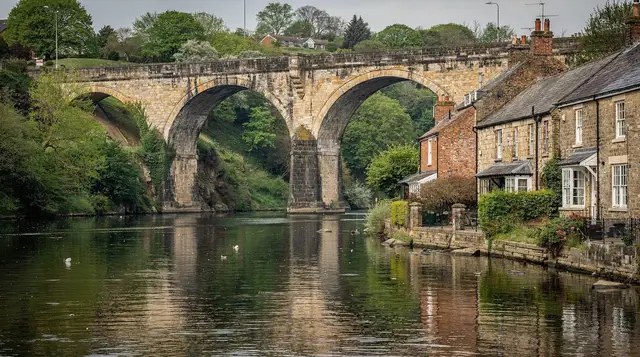
| Character | Genteel spa town, gardens, shopping | Riverside town, castle ruin, dramatic viaduct |
| --- | --- | --- |
| Best for | Tea rooms, Turkish Baths, RHS gardens | Boating on the river, castle views, a smaller-scale visit |
| --- | --- | --- |
| Time needed | A full day on its own | Half a day, easily combined with Harrogate |
| --- | --- | --- |
| From York | 35 minutes direct train | ~40-45 minutes, via Harrogate or direct depending on service |
Most visitors give Harrogate the bulk of a shared day, since it has more to see, and treat Knaresborough as a shorter add-on either before or after — see the Harrogate and Knaresborough day trip guide for a suggested split.
A slower-paced day: gardens and green space
If tea rooms and shopping aren’t the priority, Harrogate rewards a slower, garden-focused day. Beyond RHS Harlow Carr, the Stray and Valley Gardens together offer several hours of unhurried walking without leaving the town centre, and the pump room’s sulphur well is worth the brief, mildly unpleasant detour for the history alone. Combined with a stop at the Mercer Art Gallery, it’s possible to spend a full day in Harrogate without setting foot in a shop or tea room, which is a genuinely different way to experience the town than the Bettys-and-boutiques version most visitors default to.
Practical notes
Harrogate is comfortably walkable — most of the attractions above sit within a 15-20 minute walk of the train station — so you don’t need a car once you arrive, even if you drove. It gets busy on Saturdays with a mix of day-trippers and conference attendees, so if you want a quieter visit, aim for a weekday. It also makes a natural base for exploring the wider area: Knaresborough is one stop away by train, Ripon and Fountains Abbey are 30-40 minutes by car, and Brimham Rocks is a similar drive into Nidderdale.
For planning a combined trip, the Harrogate and Knaresborough day trip guide and the Fountains Abbey day trip guide both work well alongside this visit, and the two-day York, Harrogate and Fountains Abbey itinerary is built specifically around this corner of Yorkshire if you have more than a single day to spend. If you’re deciding how many days to allocate across your whole trip, the how many days in York guide covers where a Harrogate day trip fits into a wider itinerary.
Frequently asked questions about Harrogate
How long does it take to get from York to Harrogate?
Around 35 minutes by direct train, with services roughly every half hour on weekdays. By car it’s a similar journey time via the A59, though town-centre parking is limited and pricier on Saturdays.
Do I need to book the Turkish Baths in advance?
Yes, strongly recommended, especially for weekend sessions. Men-only, women-only and mixed sessions run on a rotating timetable, so check which slot you want before booking rather than turning up and hoping.
Is the Harrogate Bettys different from the York Bettys?
They’re both genuine Bettys branches with the same menu, but Harrogate’s Parliament Street tea room is the original, opened in 1919, and is often just as busy — sometimes busier — than the York branch, particularly at weekends.
Can I visit Harrogate and Knaresborough in one day?
Yes, comfortably. They’re one stop apart on the same train line (about 5-6 minutes between them), and most visitors combine a morning in one with an afternoon in the other. Doing both properly takes a full day rather than a rushed half-day.
Is Harrogate worth visiting if I’ve already seen York?
Yes — it’s a genuinely different kind of place: Georgian and Victorian spa-town elegance rather than medieval streets, with gardens, tea rooms and a slower pace. It works well as a contrast rather than a repeat of what York already offers.
Do I need a car to get around Harrogate?
No. The town centre, Bettys, the Turkish Baths and the Montpellier Quarter are all within easy walking distance of the train station. A car is only useful if you’re heading further out to Fountains Abbey or Brimham Rocks afterwards.
Should Harrogate or Knaresborough get more of my day?
Harrogate generally deserves the larger share, since it has more attractions (Bettys, the Turkish Baths, Harlow Carr, the Stray) and gardens to fill a full day. Knaresborough works well as a shorter, half-day add-on either side of your Harrogate time.
Can I spend a day in Harrogate without shopping or tea rooms?
Yes — the Stray, Valley Gardens, the Royal Pump Room and the Mercer Art Gallery together give a full, garden-and-history-focused day that doesn’t depend on Bettys or the Montpellier Quarter’s shops.