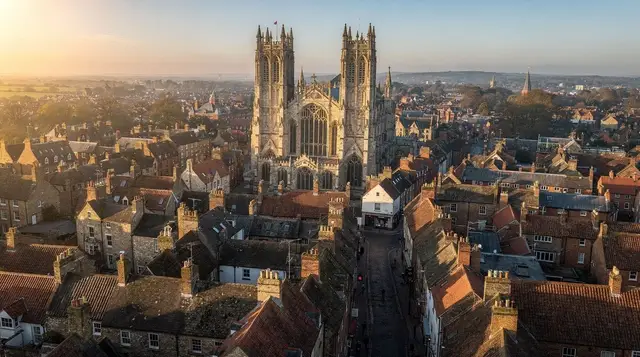
York vs Bath: which city break should you pick
York and Bath show up on the same shortlists constantly — both are compact, walkable, history-dense English cities with a reputation for a good weekend away, both photograph beautifully, and both are firmly on the well-trodden tourist trail. But they’re genuinely different trips once you get past the surface similarity, and this comparison is about which differences actually matter for your specific trip.
| York | Bath | |
|---|---|---|
| From London | Under 2hrs, King’s Cross | Around 90min, Paddington |
| --- | --- | --- |
| Best for | Variety, families, day trips | Elegance, spa, couples |
| --- | --- | --- |
| Typical stay | 2–3 days | 1–2 days |
| --- | --- | --- |
| Standout free sight | National Railway Museum | Bath Abbey exterior & Crescent |
| --- | --- | --- |
| Day-trip radius | Coast, Dales, Moors, Castle Howard | Bristol, Stonehenge, Cotswolds |
Getting there
York has the stronger transport case for most UK and international visitors. The direct LNER service from London King’s Cross takes under two hours (from around £28.80 if booked ahead), and York also sits on cross-country routes connecting easily to Edinburgh, Leeds and Manchester, making it a natural stop on a longer UK itinerary. See getting to York for full detail.
Bath is reachable from London Paddington in about 90 minutes, marginally faster than York, but it sits on a less well-connected line for anyone building a wider UK trip — it’s easy from London and reasonably easy from Bristol, but awkward to combine with, say, a Scotland leg the way York’s east coast position allows. If London is your only anchor point, Bath’s journey time gives it a slight edge; if you’re building a multi-stop UK trip, York’s position on the network generally works harder for you.
Driving is a secondary option for both, but neither is the easy choice: York’s compact medieval core is largely closed to casual traffic (see park and ride), and Bath’s centre has similar restrictions plus notoriously narrow streets around the Georgian core. Rail beats driving into either city for a typical weekend trip.
Cost
Bath tends to run more expensive, particularly for accommodation — its Georgian architecture and spa-town heritage attract a slightly more upmarket visitor profile, and hotel and restaurant pricing reflects that, especially in the historic centre near the Roman Baths and the Royal Crescent. York is comparably priced for food and drink but generally offers a wider range of genuinely affordable accommodation options within walking distance of the centre, since it’s a larger city with more housing stock beyond the tourist core.
See York on a budget for realistic daily spend figures — budget travellers in York can expect to do noticeably better than the equivalent trip to Bath.
Atmosphere and vibe
This is the most subjective category, and it’s worth being honest that they’re aiming at different things. Bath is elegant, uniform and Georgian — golden Bath stone, sweeping crescents, a genuinely harmonious streetscape that feels almost stage-managed in its consistency. York is messier and more layered — medieval timber-framed buildings on the Shambles sit near Georgian townhouses, Roman remains, Viking archaeology and a working cathedral city that doesn’t feel curated in the same way. If you want a single, cohesive architectural statement, Bath wins. If you want a city that feels like it’s accumulated 2,000 years of history rather than been designed in one era, York has the edge.
Headline attractions
Bath’s signature attraction is the Roman Baths, a genuinely excellent, well-presented Roman bathing complex, paired with the Georgian Royal Crescent and Bath Abbey. It’s a tighter, more singular sightseeing proposition — you can reasonably say you’ve “done” Bath’s headline sights in a day.
York spreads its appeal across more attractions: York Minster (one of the largest Gothic cathedrals in northern Europe), JORVIK Viking Centre, the free and genuinely world-class National Railway Museum, York Castle Museum, and the City Walls you can walk for free. There’s more here to occupy multiple days without repeating yourself — see best things to do in York for the full list.
For a single guided introduction to York’s headline sights in one go, this city highlights walking tour covers the Minster area, the Shambles and the city walls in a couple of hours — useful if you’re short on planning time.
Family suitability
York is the stronger pick for families. The free National Railway Museum alone is a genuine draw for children, and attractions like JORVIK and York Castle Museum are purpose-built for a family audience in a way Bath’s Roman Baths — fascinating but more of an adult-paced walkthrough — isn’t quite designed for. See York with kids for the detailed family breakdown. Bath works better as an adults’ or couples’ trip, particularly if the Thermae Bath Spa (a modern rooftop spa experience) is part of the plan.
Day trips from each base
York’s day-trip radius is genuinely excellent — the Yorkshire coast (Whitby, Scarborough), the Yorkshire Dales, the North York Moors and Castle Howard are all within striking distance, giving a multi-day stay real variety without repeating the city centre. See family day trips from York and Yorkshire Dales from York for specifics.
Bath’s day-trip options are decent but narrower — Bristol is close and worthwhile, Stonehenge and the Cotswolds are commonly bolted on, but you’re generally looking at longer or more logistically involved trips than York’s tighter regional cluster.
How many days each city needs
Bath’s compact, singular sightseeing core means most visitors are satisfied with one to two days — beyond that, you’re largely repeating ground or venturing out on day trips that take you away from the city itself. York rewards a slightly longer stay, two to three days for the city itself, per how many days in York, with a third or fourth day well spent on a Yorkshire day trip rather than more time in the centre.
Food and drink scene
Bath’s dining scene leans upmarket and polished, with a strong concentration of well-regarded restaurants around the centre reflecting its wealthier visitor demographic — good if you’re planning a special-occasion trip with a generous dining budget. York’s food scene is broader in range, from genuinely excellent fine dining down to solid, affordable pub food, with a particularly strong historic pub culture — see best pubs in York and where to eat in York — that gives it an edge for travellers who want atmosphere and value alongside good food rather than a purely upmarket dining experience.
York’s afternoon tea scene, tied to its Rowntree’s and Terry’s chocolate heritage, is also a genuine point of distinction — see afternoon tea in York.
Nightlife and pub culture
York has a markedly stronger and more varied pub scene, with a genuine density of historic, atmospheric pubs packed into the old town — some centuries old, with low beams and open fires that Bath’s more formal Georgian streetscape doesn’t really offer in the same volume. Bath’s evening scene leans toward wine bars and restaurant-adjacent drinking rather than York’s more traditional pub-crawl culture. If a proper pub evening is part of what you want from a city break, York has the clearer advantage.
Shopping
Both cities offer good independent shopping, but they lean different directions. Bath’s shopping centres on its elegant Georgian streets and a scattering of boutique and antique shops that suit its upmarket image. York’s Shambles and its independent shops offer a denser, more atmospheric medieval shopping street experience, alongside a genuinely good market culture — see York markets — that Bath doesn’t quite replicate in the same historic setting.
Weather and best time to visit
Both cities sit in similar temperate zones and see comparable rainfall through the year, so weather isn’t a major differentiator either way — pack for rain regardless of which you choose. York’s shoulder-season sweet spot (May and September) avoids both summer crowding and winter cold while keeping costs down; Bath follows a broadly similar seasonal pattern, though its spa-town appeal means it holds up reasonably well even in cooler months if the Thermae Bath Spa is a priority for your trip.
Walkability and getting around
Both cities are genuinely walkable, compact old towns where you won’t need public transport for typical sightseeing. York has a slight edge for anyone doing a lot of walking, since the flat terrain inside the walls contrasts with some of Bath’s noticeably steeper streets around the upper town — worth knowing if mobility or stamina is a consideration for anyone in your group. See getting around York for the city-specific detail.
Which one should you actually pick
If your priority is a tight, elegant, easily “completed” weekend with strong spa and wellness options, Bath is the better fit, especially paired with a London trip given the short rail link. If you want more sightseeing variety, stronger family appeal, a wider and more interesting day-trip radius, and generally better value accommodation, York is the stronger overall pick — and it holds up better across a longer three-to-four-day stay without running out of things to do.
Many travellers do both on separate trips rather than treating it as a strict either/or, since the two cities genuinely don’t compete for the same kind of day once you dig past the surface-level “historic English city” comparison. If pressed for a single default recommendation for a first-time UK visitor without strong existing opinions either way, York edges it on variety and value alone.
History and heritage angle
Bath’s story is centred, essentially, on two eras: Roman bathing culture and Georgian high society, and the city presents both with real polish. York’s history is more layered and spans a longer arc — Roman Eboracum, Viking-age Jorvik, medieval guilds and city walls, and a Georgian layer of its own sitting alongside all of it — see Roman York, Viking York and Georgian York for the range on offer. If you want one clear historical narrative told extremely well, Bath’s focus works in its favour.
If you want to feel a city’s history accumulate across two thousand years rather than centre on one or two golden eras, York has the edge.
Ghost tours and after-dark appeal
York has built a genuine, well-established reputation as one of the most haunted cities in Europe, with a dense concentration of ghost walks and a folklore culture that Bath doesn’t share to the same degree — see best ghost walks in York and most haunted city. If an atmospheric evening ghost walk is part of what you’re after from a city break, York is the stronger choice by a clear margin; Bath’s evening offering leans more toward dining and wine bars than folklore and storytelling.
If you’re choosing based on a first UK visit
For a first-time UK visitor without a London base, York’s stronger cross-country rail connections make it easier to combine with Edinburgh or the Lake District on the same trip — see first-time York guide for planning specifics. Bath works better as an add-on to a London-anchored trip given the short, direct rail link from Paddington.
Accommodation styles
Bath’s accommodation tilts heavily toward boutique hotels and elegant Georgian townhouse conversions, reflecting its upmarket image, with fewer large-scale budget options in the historic core itself. York offers a wider spread — from independent guesthouses and budget chains to genuinely characterful boutique hotels — spread across a larger city, giving visitors more flexibility to find something matching their specific budget within easy walking distance of the centre. See where to stay in York for area-by-area detail on which neighbourhoods suit which kind of trip.
Accessibility and mobility
Both cities are old and involve some cobbled or uneven surfaces, but the specific challenges differ. Bath’s upper town, including much of the area around the Royal Crescent, climbs a genuine hill, while its centre around the Baths and Abbey is relatively flat. York’s terrain inside the walls is largely flat throughout, though the Shambles and some snickelways have narrow, occasionally cobbled sections — see accessible York for a fuller breakdown. Neither city is a poor choice for reduced mobility, but York’s flatter overall footprint is the easier one to navigate on foot for a full day.
Which one suits a repeat UK visitor
If you’ve already done the standard first-timer’s London-Bath-Cotswolds loop, York offers a genuinely different second UK city break: different architectural eras, a different regional food and pub culture, and a day-trip radius (Whitby, the Dales, the Moors) that doesn’t overlap with the Cotswolds-Stonehenge circuit most Bath visitors also do. It pairs naturally with Edinburgh or the Lake District rather than repeating the same south-of-England loop.
Frequently asked questions about York vs Bath
Which is cheaper, York or Bath?
York generally offers better value, particularly on accommodation — Bath’s Georgian centre commands a premium that reflects its upmarket, spa-town reputation.
Which city is better for families, York or Bath?
York, by a clear margin — the free National Railway Museum and purpose-built family attractions like JORVIK give it stronger appeal for children than Bath’s more adult-paced Roman Baths and Georgian architecture.
How many days should I spend in Bath compared to York?
Bath is usually well covered in one to two days given its tighter sightseeing core; York rewards two to three days for the city plus an optional extra day for a Yorkshire day trip.
Is Bath or York easier to reach from London?
Both are around 90 minutes to two hours by direct train from London, with Bath marginally faster from Paddington — though York’s position on the wider UK rail network makes it easier to combine with other cities beyond London.
Can I do both York and Bath on the same UK trip?
It’s possible but involves a long cross-country journey between them, since they sit on opposite sides of England without a direct fast link — most travellers treat them as separate trip anchors rather than combining both in one visit.
Related guides

York vs Edinburgh: which city break should you pick
York or Edinburgh for a UK city break? Real differences in cost, size, getting there, day trips and how many days you actually need for each.

Is the York Pass worth it? The real maths
York Pass and York City Pass explained with real 2026 attraction prices — when a pass saves you money, and when paying per attraction is the smarter

Afternoon tea in York: Bettys and the best alternatives
Everything you need to know about afternoon tea in York, from booking Bettys and its queues to quieter, cheaper and more unusual alternatives.

The best ghost walks in York, compared
York has more evening ghost walks than any UK city its size. Here's how the main operators actually differ, honest prices, and which one suits you.
Ready to book? Top tours for this guide
We earn a small commission if you book through GetYourGuide or Viator — at no extra cost to you. Every tour is hand-picked and verified.