York riverside
The River Ouse through York — towpath walks, cruise options, and the quieter side of the city away from the Shambles crowds.
Quick facts
Top tours and experiences
We earn a small commission if you book through GetYourGuide or Viator — at no extra cost to you. Every tour is hand-picked and verified.


The River Ouse runs straight through York’s centre, and its banks offer the quietest walking in the city — a genuine contrast to the Shambles crowds a few minutes away, and a decent way to see York from a different angle without paying for an attraction.
| Where | River Ouse through York, from Museum Gardens to Skeldergate |
| --- | --- |
| Time needed | 1-2 hours for a walk; add 45min-1hr for a cruise |
| --- | --- |
| Cost | Free to walk; cruises from around £14 |
| --- | --- |
| Getting there | Walkable from anywhere inside the city walls |
| --- | --- |
| Best time | Spring-autumn for walking; check flood levels after heavy rain |
Why bother with the riverside
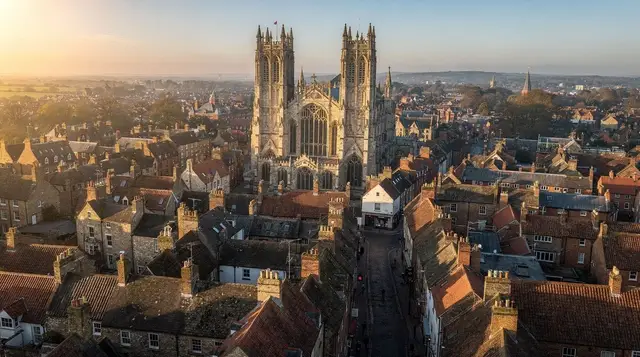
Most first-time visitors never leave the Minster-Shambles-Castle Museum triangle, which means the riverside stays comparatively empty even in peak season. It’s also flat, easy walking, free, and gives views back toward the Minster’s towers and the huddled rooftops of the old town that you don’t get from street level. If the crowds inside the walls are wearing thin, twenty minutes along the river resets the visit without costing anything.
Walking routes along the Ouse
New Walk, on the south bank starting near Skeldergate Bridge, is the classic riverside walk — a tree-lined promenade laid out in the 1730s as one of England’s earliest purpose-built public walks, running roughly 1.5 miles south toward Fulford. It’s flat, well-maintained, and popular with locals rather than tourists, which makes it a reasonable barometer for how the city feels away from the main sights. On the opposite bank and heading north from Lendal Bridge, the path continues past the Museum Gardens and toward the racecourse, with benches and good sightlines back across the water toward the Minster.
The full York riverside walks guide maps out several route options by length and starting point.
Be aware the Ouse floods with some regularity, particularly between November and March after heavy rain upstream in the Dales — sections of riverside path can close with little notice, and in bad years floodwater reaches into low-lying streets like King’s Staith. It’s rarely dangerous for visitors, since closures happen well ahead of serious flooding, but it can mean a planned riverside walk simply isn’t accessible that day. Check current conditions locally if visiting in winter.
River cruises
Several operators run cruises from the landing stages near Lendal Bridge and King’s Staith, with a standard daytime round trip lasting about 45 minutes to an hour and costing from roughly £14-£16 per adult. These give a genuinely different view of the city — passing under the historic bridges, past the Museum Gardens, and out toward quieter stretches south of the centre — with commentary covering York’s river history and Viking-era trading past. Evening cruises with food (afternoon tea or dinner options) run at a premium and tend to book up on weekends. It’s a reasonable way to spend an hour if you want to sit down rather than walk, though it’s not essential if time is tight.
Book a daytime York river cruiseFor a different atmosphere, the floodlit evening cruise passes the illuminated bridges and riverside buildings after dark — a genuinely different view of the city than a daytime trip gives.
Book a floodlit evening river cruiseWhat’s actually along the riverbanks
The Museum Gardens, on the west bank near Lendal Bridge, hold the ruins of St Mary’s Abbey alongside the Yorkshire Museum and a genuinely pleasant green space to sit — free to enter, and one of the better spots in the city for a picnic lunch away from the main tourist routes. Nearby, the King’s Staith and Queen’s Staith areas along the water host a handful of riverside pubs with outdoor seating, popular on warm evenings, though prices here run slightly above average given the location.
Further along, Rowntree Park (south of New Walk) is a proper local park with a café, playground and river frontage — worth knowing about if travelling with children who need somewhere to run around that isn’t a paid attraction.
Combining a riverside walk with the rest of York
The riverside works best as a half-hour to hour addition to a longer day in the city rather than a standalone destination — it doesn’t have the density of sights that justifies a dedicated trip. A reasonable route links York city centre with a loop down to Skeldergate Bridge, along New Walk, and back up via Ouse Bridge, picking up the Museum Gardens on the return leg. It pairs naturally with the city walls walk, since several sections of wall run close to the river, and fits well into a slower-paced two days in York itinerary where you have room for a non-attraction afternoon.
Wildlife and quieter corners
The Ouse hosts a reasonable amount of birdlife — herons and cormorants are commonly seen along quieter stretches, and swans nest near several of the bridges in spring. It’s not a wildlife destination in itself, but a genuine bonus for anyone walking the paths with an eye out. The stretch south past Rowntree Park toward Fulford is where the city genuinely thins into countryside, if you want a longer walk with fewer people around.
The river’s role in York’s history
The Ouse (and its smaller tributary, the Foss, which joins it near Castle Museum) is largely why York exists where it does — the Romans founded Eboracum here in 71 AD specifically because the rivers offered a defensible, navigable position, and the city’s Viking name, Jorvik, continued to depend heavily on river trade centuries later. King’s Staith and Queen’s Staith, the wide paved areas either side of Ouse Bridge, take their names from their historic role as royal landing stages and working wharves, where goods were unloaded well into the 20th century before road and rail transport took over.
Standing at the riverbank today, it’s worth remembering the water itself has been the throughline connecting York’s Roman, Viking, medieval and Georgian eras more than any single building has.
Seasonal differences along the river
Spring brings the best combination of mild weather and manageable flood risk, plus blossom along several tree-lined stretches of New Walk. Summer is busiest for cruises and riverside pub gardens, though the towpaths themselves rarely get as crowded as the Shambles or Minster area even in August. Autumn brings good colour along the tree-lined sections but rising flood risk toward the end of the season. Winter is the quietest time to walk the river — genuinely atmospheric on a crisp, clear day, though flooding is a real possibility and some path sections may be temporarily closed after heavy rain; check conditions before setting out if visiting between November and March.
Cycling the riverside paths
Both banks of the Ouse offer reasonable cycling routes for anyone who’s brought or hired a bike, particularly the longer stretch south past Rowntree Park toward Naburn, which follows a disused railway line converted into a shared-use path largely away from traffic. It’s a flatter, faster way to cover more ground than walking if you want to see further beyond the immediate city centre, and connects eventually toward the wider National Cycle Network routes running out of York. Bike hire is available from a handful of operators near the station and city centre, worth considering for a half-day if the weather’s good and you’d rather not walk the same distance.
The bridges themselves
York’s river bridges are worth a moment of attention rather than simply a route across. Lendal Bridge, an ornate iron structure dating from 1863, replaced an earlier chain ferry crossing and remains one of the more photogenic spots on the river, particularly with the Minster visible behind it. Ouse Bridge, closer to the city centre, sits on the site of the original medieval river crossing and has been rebuilt multiple times over the centuries; the current structure dates from the 1820s. Skeldergate Bridge, further south, is the newest of the three main crossings, opened in 1881 to serve the growing area south of the old walled city.
None require a detour to see — they’re simply worth pausing on rather than crossing at a rush.
Riverside walk vs cruise: which suits you
| Walking | Cruise | |
|---|---|---|
| Cost | Free | From ~£14 |
| --- | --- | --- |
| Time | 20 min-1.5 hours, your pace | 45 min-1 hour, fixed |
| --- | --- | --- |
| Best for | Photography, exercise, flexibility | Sitting down, commentary, different angle |
| --- | --- | --- |
| Weather dependence | Higher — rain and flooding affect paths | Lower — covered seating usually available |
| --- | --- | --- |
| Booking | None needed | Advisable for weekends and evenings |
Combining the two — a short walk to the landing stage, then a cruise back — is a reasonable way to get both without committing a full afternoon to either.
An easy riverside loop
A workable route for a spare hour or two: start at Lendal Bridge, walk north past the Museum Gardens, cross at the next bridge and return south along the opposite bank past King’s Staith and Ouse Bridge, finishing at Skeldergate Bridge before either continuing onto New Walk or heading back into the city centre. It touches most of the river’s highlights — the Museum Gardens, the historic bridges, and a stretch of the more residential south bank — without requiring the full commitment of the longer New Walk route toward Fulford.
Frequently asked questions about York’s riverside
Is the York riverside walk suitable for a short visit?
Yes — even 20-30 minutes gives a good sense of it, and it connects easily to the Museum Gardens and city walls if you want to extend the walk.
Do I need to book a river cruise in advance?
Advance booking isn’t essential for a standard daytime cruise outside peak weekends, but it guarantees a spot and is worth doing in July and August or for evening dining cruises.
Does the River Ouse flood in York?
Yes, regularly in winter after heavy rainfall in the Yorkshire Dales upstream. Riverside paths can close temporarily; check local conditions if visiting between November and March.
Is the riverside walk accessible with a pushchair or wheelchair?
Yes, New Walk and the path north from Lendal Bridge are both flat, paved, and generally easy going, making them more accessible than the cobbled streets in the old town.
What’s the best time of day for riverside photos in York?
Early morning or golden hour in the evening give the best light on the water and the Minster reflection, with far fewer people along the paths than midday.